English version is below
Прядка з’явилась у Європі і, відповідно, в Україні ще в 15 столітті, прийшовши на зміну веретену, і лише всередині 20 століття зійшла зі сцени.
Прядка була сакральною для наших предків, а ми ж зараз зовсім нічого не знаємо про це ремесло.
Пряли зазвичай жінки, і робили це, ледве зіп’явшись на ноги й аж до самої смерті. Пряли вдень і вночі. І восени, й весною, і влітку, а особливо взимку. Пряли, прокинувшись вдосвіта, і пряли, засинаючи з каганцем під прядкою. Це була не залежність, а необхідність. Скільки ти чого випрядеш, то стільки буде в тебе в хаті, починаючи від рушника чи килимка, й завершуючи одягом для родини. Якщо нічого не випрядеш – будуть усі голі й босі. Пряли на придане. І пряли, щоб не гірше, ніж у людей.
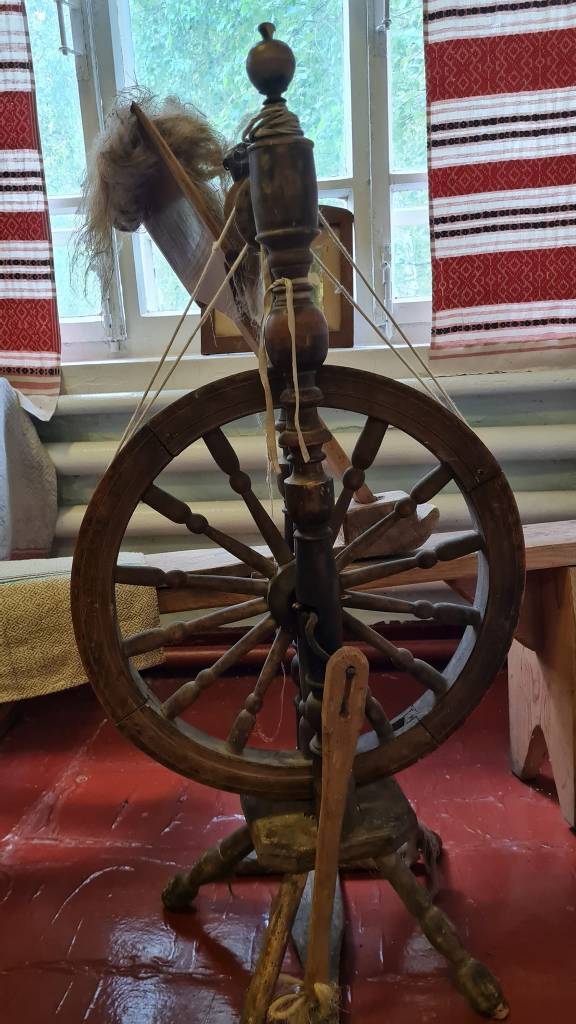
Прядка, без перебільшення, була основою життя. Її колесо невтомно крутилося, і час та життя багатьох поколінь працьовитих українців минали під звуки прядки.
Походження слова – праслов’янське, тож не дивно, що в багатьох слов’янських мовах саме так і звучить це життєдайне ремесло: přasć у верхньолужицькій, prząść – у польській, příst – чеською, priast’ – словацькою, pśěsć – нижньолужицькою, преда́ – болгарською тощо.
Що цікаво – «прясти» також споріднене із литовським sprę́sti – «напинати».
Це слово вийшло за межі означення ремесла і часто позначає інші дії, наприклад, прясти очима, прясти ногами, прясти гривою (про коня) тощо.
Ці слова вживає й народна мудрість:
Або прясти, або ткати, або пісні співати.
Добра пряха й на скіпці напряде.
Сім днів пряла, та нічого не дістала.
Яка прядка, така нитка.
Треба прясти, щоб руб’ям не трясти.
Тож згадаймо сьогодні прядку – колесо життя наших предків. І згадаймо прядки в хатах наших бабусь та прабабусь. Вони – наша основа й наше колесо часу 
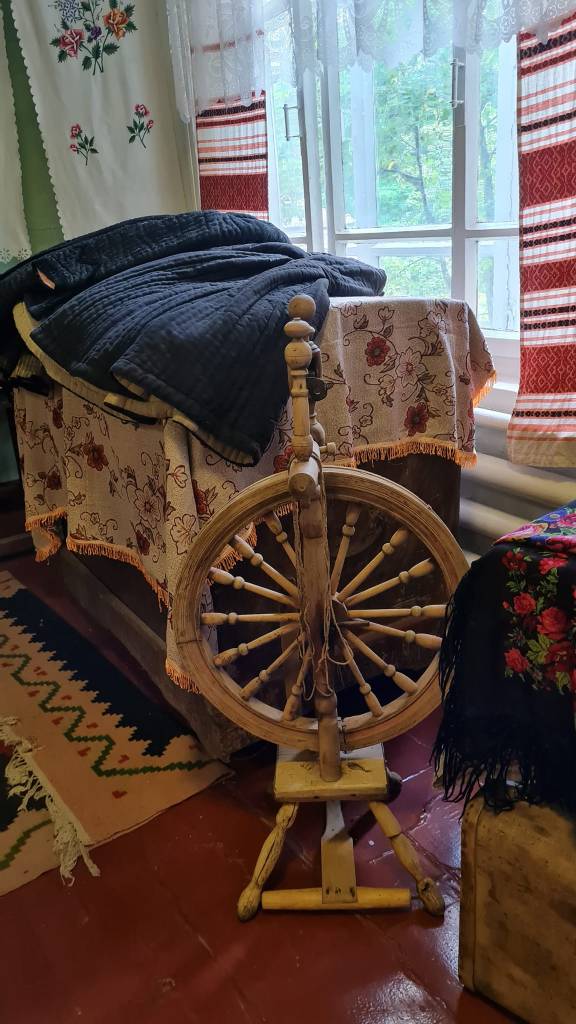
(На фото: прядка зі школи-музею села Заньки Чернігівської області, в якому народилась Марія Заньковецька).
#справжніісторії #історії #захопливіісторії #традиції #прядка #ремесло #Україна #прясти
Article in English:
The Mysterious History of the Spinning Wheel
The spinning wheel appeared in Europe—and accordingly in Ukraine—as early as the 15th century, replacing the spindle, and only faded from everyday use in the mid-20th century.
For our ancestors, the spinning wheel was sacred, yet today we know almost nothing about this craft.
Spinning was usually done by women, from the moment they barely managed to stand on their feet and until death itself. They spun day and night. In autumn and spring, in summer, and especially in winter. They spun at dawn upon waking and spun while falling asleep, with an oil lamp glowing beneath the spinning wheel. This was not an addiction but a necessity. Whatever and however much you spun—that was what you had in your home: from towels and small rugs to clothing for the entire family. If nothing was spun, everyone would be naked and barefoot. They spun for dowries. They spun so as not to be worse off than others.
Without exaggeration, the spinning wheel was the foundation of life. Its wheel turned tirelessly, and the time and lives of many generations of hardworking Ukrainians passed to the sound of its hum.
The origin of the word is Proto-Slavic, so it is no surprise that in many Slavic languages this life-giving craft sounds similar: přasć in Upper Sorbian, prząść in Polish, příst in Czech, priast’ in Slovak, pśěsć in Lower Sorbian, predá in Bulgarian, and others.
Interestingly, the verb “to spin” is also related to the Lithuanian sprę́sti, meaning “to stretch” or “to tighten.”
The word has gone beyond its original meaning as a craft and is often used metaphorically to describe other actions—for example, to spin with one’s eyes, to shuffle one’s feet, or to toss a horse’s mane.
These words also live on in folk wisdom:
Either spin, or weave, or sing songs.
A good spinner can spin even on a splinter.
She spun for seven days and gained nothing.
As the spinning wheel is, so is the thread.
One must spin so as not to tremble in rags.
So today, let us remember the spinning wheel—the wheel of life of our ancestors. Let us recall the spinning wheels that stood in the homes of our grandmothers and great-grandmothers. They are our foundation and our wheel of time.
(In the photo: a spinning wheel from the school-museum of the village of Zanky, Chernihiv region, where Maria Zankovetska was born.)
Хочете підтримати нас?
Кожен ваш донат допоможе ще активніше розвивати наш некомерційний проєкт, який активно працює вже більше 3 років.
Справжні історії – просвітницький проєкт, який на волонтерських засадах розповідає цікаві історії про Україну, відомих українців, подорожі, традиції, звичаї, кухню, а також захопливі історії про мандрівки світом та відомих особистостей у світі.
У наших планах – створення також англомовної версії сайту, щоб світ більше дізнався про Україну та українців.
Наші рахунки:
Картка у грн.: 5363 5421 0596 6718
Підтримати проєкт
Want to support us?
Each of your donations will help our non-commercial project, which has been producing stories for you for already three years, to become even better.
True Stories is an educational project that, on a volunteer basis, tells interesting stories about Ukraine, famous Ukrainians and other inspiring people, travels, traditions, customs, and cuisine.
Our plans include the creation of an English-language version of the site so that the world can learn more about Ukraine and Ukrainians.
Support the project
Підтримати проєкт
1,00 $
 Справжні історії