English version below
#подорожні_історії
Надвечірнє зимове сіре небо й сіра вода Адріатичного моря зливаються. Лише деінде дерев’яні та металеві опори виокремлюють ці дві глибинні безкінечності. А ще – потяг, який одночасно ніби й корабель, бо прямує водним шляхом.
Це – Венеція. Потяг прибуває до станції Санта Лючія.
Вокзал тут так назвали на честь святої Лючії Сіракузької – покровительниці сліпих. І тепер будь-хто, прибуваючи сюди – в одне з найунікальніших місць на планеті – має змогу прозріти: побачити досі небачене.
На площі навпроти вокзалу багато людей з різних місць земної кулі. Різні мови, поведінка, стиль одягу, колір шкіри. І – багато голубів. Але жодного таксі чи будь-якого транспорту на колесах. На колесах тут їздять хіба що валізи. Туристи переважно їздять на вапоретто (катерах) та ходять пішки: вуличками, мостиками, обабіч каналів. Відчуття чогось казкового й нереального, куди ти потрапляєш із валізою, ніби зі своїм життєвим багажем.
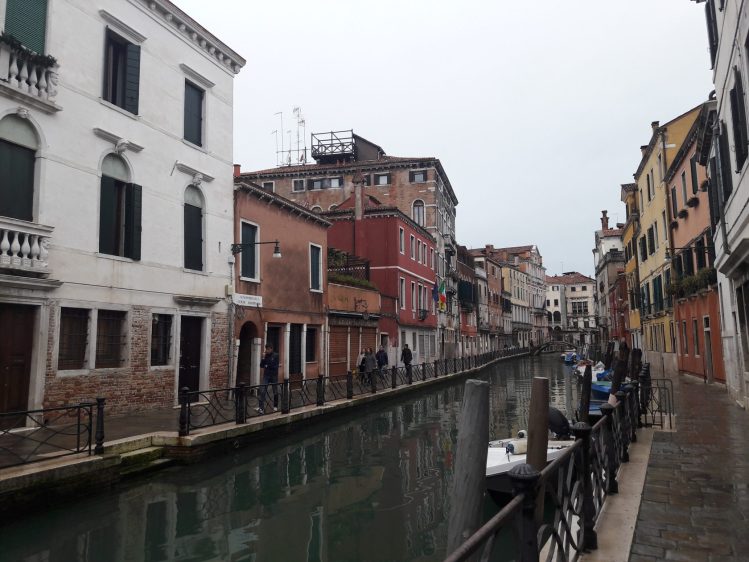
Вода в каналах дивовижного смарагдового кольору. А кожен будинок – неповторний, схожий на прожитий у житті день. Деякі вулички настільки вузькі, що дають ще один привід зрадіти власній стрункості.
- У нашій тратторії найсмачніша їжа! І найсмачніший белліні! – закликає на вході власник закладу – усміхнений огрядний італієць, показуючи виразом обличчя та рухами, що нам саме сюди.
Белліні – це 11% просекко з персиковим соком, один із найпопулярніших венеційських коктейлів. Чи найкращий він саме тут – важко сказати: я лише починаю пробувати на смак Венецію.
За сусіднім столиком раптово починає співати красивий молодий хлопець. Голос дзвінкий і гучний, схожий на мою радість від приїзду у Венецію. «Скузі, сеньйоро, я завжди співаю, коли мені добре. А ще я співаю у ванні і на кухні. І на роботі. Я гондольєро», – пояснює він італійською.
Власник тратторії власноруч приносить нам їсти (це звична справа для Венеції), наприкінці розраховує і супроводжує до дверей, притримуючи їх, поки ми вивозимо свої валізи. Донька радісно дякує йому за відсутність у тратторії вайфаю, і я для годиться теж. Загалом у Венеції не завжди пропонують інтернет, і туристи цим фактом не дуже засмучуються, бо й без нього тут добре.

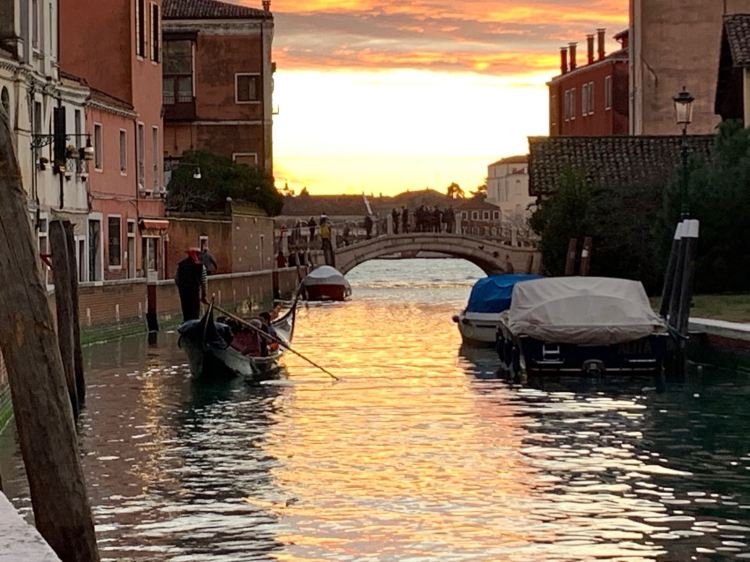
Тим часом Венецію обіймає вечір, дивуючи неймовірним поєднанням кольорів неба, води й суші. При цьому хмари в небі чимось схожі на човни, а відблиски води в каналах – на хмари. Такий собі взаємообмін. Це Венеція. І вона снитиметься навіть вночі.
Ранок. Сніданок у готелі обслуговують жінки за 60: розливають каву в чашки туристам, доливають молоко, докладають солодощі (dolci). І це трохи незвично, бо зазвичай скрізь це роблять молоді. Але від цього таке відчуття, ніби потрапляєш у гості до бабусі. До Бабусі Венеції. Чи до прабабусі, бо років їй і справді чимало: перші поселення з’явились тут на початку 400-го року. А далі вона завжди була відомою: як центр торгівлі, розквіту, відродження та елегантності.
За столиком навпроти – жінка, якій років 100. Говорить французькою, ходить тремтячою ходою. Але – на каблуках, і з вишуканою зачіскою та блузою без рукавів. Її притримує доглядальниця. У мадам – неймовірна усмішка. Ніби таїть щось таке дивовижне. Схоже, їй, як і Венеції, є що згадати у своїй життєвій історії. І є що забути. Та рішуче викинути подумки в канал, адже він все одно туристам намалює небо.
Прямуємо на вихід і тут – упс… Східці готелю, і, власне, всю вулицю заповнено водою. Вона холодно виблискує сірістю й ніби нагадує про безліч неконтрольованих речей у нашому житті. Води так багато, що навіть важко уявити, куди це все швидко може зникнути. У Венеції – чергова повінь. «Так зазвичай у нас буває взимку», – кажуть на ресепшені тоном, яким годину тому нам сказали «добрий день».

Уже за півгодини, купивши чоботи в азійських емігрантів, які цупко тримають на них високу ціну, ніби венеційські міцні фундаменти воду, я чомусь згадала про стару француженку. Як вона з цього вибиратиметься? Взує гумові чоботи на каблуки, обжене доглядальницю, вибереться на сухе й кричатиме: «Ну ж бо, ходіть швидше сюди! Годі вам там швендяти, не відставайте!» Так цілком може бути при столітніх амбіціях у місті, заснованому на понад 100 невеличких островах…

На людних вулицях лежать високі дерев’яні та металеві настили. Але багато хто їх ігнорує, озброївшись чоботями чи бахілами, та діставши із шухляд пам’яті свої яскраві дитячі емоції від пізнання калюж. Власне, саме так роблю і я.
Площа Сан Марко – найголовніша площа Венеції.
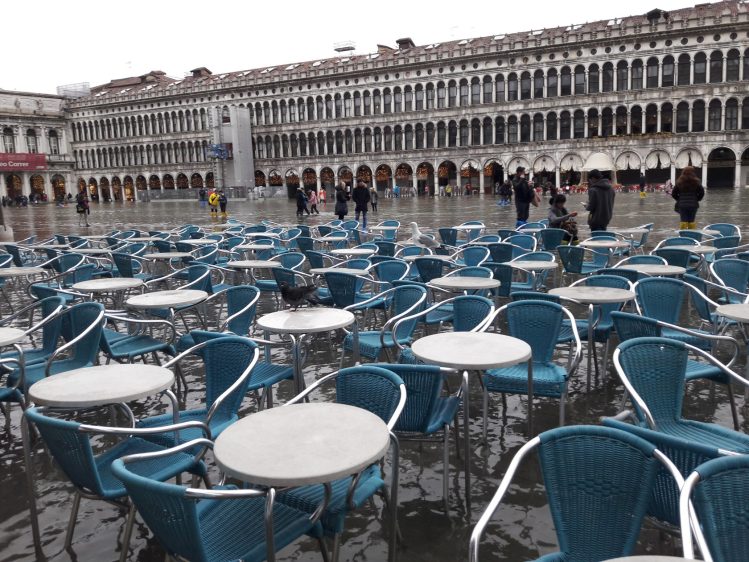
До знаменитого Венеційського карнавалу лишається зовсім недовго, а поки що тут інший карнавал – води. Велика кількість порожніх стільців від прилеглих ресторанів посеред дня чимось схожа на імпровізовані місця для оркестру, які, здається, ос-ось хтось заповнить. І прозвучать уславлені «Пори року» знаменитого венеційця Антоніо Вівальді, але навряд чи це буде його «L’inverno» («Зима»). Хоча насправді тут зима.
Унікальний в усіх сенсах Палац Дожів (Palazzo Ducale) зовні схожий на перевернутий корабель.
І в цьому є певна логіка – не хочеться, аби такий неймовірний шедевр кудись відплив.

У цій резиденції правителів Венеційської Республіки (дожів) вирувало колись життя, а зараз вирують натовпи туристів. Він тепер чимось нагадує велетенську фабрику з виробництва фото і селфі на фоні Золотих сходів, дивовижних архітектурних композицій, різних залів, їхнього унікального оформлення та навіть шедеврів світового мистецтва, які тут експонуються

Навіть на фоні в’язниці, де сидів колись Казанова і зміг якимось дивовижним чином звідти втекти при всій неможливості такого варіанту. Зрештою, цей ще один знаменитий усьому світові венецієць багато чого вмів такого, чого інші не могли.
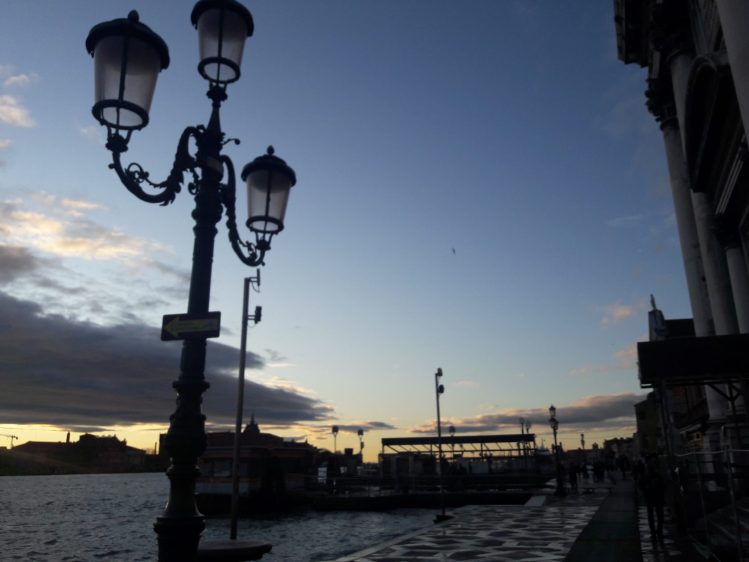
Надвечір’я.
Пристань човнів. Чайки, які нібито й позують, а ніби й просто завмерли, щоб насолодитися миттєвістю – однією з тих, яка за будь-яких обставин буде ексклюзивною у цій унікальній світовій майстерні ексклюзиву.

Людське багатоголосся перетинає знамениті венеційські мостики, які асоціюються з життєвим шляхом від пункту А до пункту Б, на якому Венеція дивовижним чином вміє дарувати шалене бажання затриматись.
Автор Тамара Куцай
Four Times of Day in Venice: Seeing Clearly, Getting Soaked, Rejoicing
The gray winter sky and the gray water of the Adriatic merge in the late afternoon. Only here and there do wooden and metal posts set apart these two deep infinities. And then there is the train, which is also, in a way, a ship, because it travels along a water route.
This is Venice. The train pulls into Santa Lucia station.
The station is named after Saint Lucy of Syracuse, the patron saint of the blind. So anyone arriving here, at one of the most extraordinary places on the planet, gets the chance to see clearly at last: to see what they have never seen before.
The square in front of the station is full of people from every corner of the globe. Different languages, manners, styles of dress, skin colors. And lots of pigeons. But there is not a single taxi, not a single vehicle on wheels. The only things on wheels here are suitcases. Tourists mostly travel by vaporetto (water bus) or on foot: along little streets, over bridges, beside canals.
It feels as though you have stepped into something out of a fairy tale, something unreal, with a suitcase in hand, as if hauling your life’s baggage.
The water in the canals is a marvelous emerald color. And every building is one of a kind, like a day you have lived through. Some of the lanes are so narrow that they give you one more reason to be glad you are slim.
“Our trattoria has the best food! And the best Bellini!” calls the owner from the doorway, a smiling, portly Italian who makes it clear, with his face and his gestures, that this is exactly where we should eat.
A Bellini is prosecco (11% ABV) mixed with peach juice, one of Venice’s most popular cocktails. Whether it is the best one here is hard to say: I am only just beginning to taste Venice.
At the next table, a handsome young man suddenly starts to sing. His voice is clear and loud, like my joy at arriving in Venice. “Scusi, signora, I always sing when I feel good. I also sing in the bath and in the kitchen. And at work. I’m a gondolier,” he explains in Italian.
The owner brings our food himself (quite normal in Venice), settles the bill at the end, and walks us to the door, holding it open while we wheel our suitcases out. My daughter cheerfully thanks him for the absence of Wi-Fi in the trattoria, and I thank him too, to be polite. Venice doesn’t always offer internet, and tourists are not much bothered, because it is lovely here without it.
Meanwhile evening wraps Venice in its arms, amazing us with an incredible mix of colors in the sky, the water, and the land. The clouds look a bit like boats, and the reflections in the canals look like clouds. A kind of exchange. This is Venice. And she will haunt your dreams even at night.
Morning. Breakfast at the hotel is served by women over sixty: they pour coffee into the tourists’ cups, top up the milk, bring out sweets (dolci). It is a little unusual, because usually young people do this. But it feels like visiting your grandmother. Grandmother Venice. Or great-grandmother, because she really is quite old: the first settlements appeared here around the year 400. Ever since, she has been famous as a center of trade, flourishing, rebirth, and elegance.
At the table across from us sits a woman of about a hundred. She speaks French and walks with a trembling gait. But she is wearing heels, an elegant hairstyle, and a sleeveless blouse. A caregiver steadies her. Madame has an incredible smile, as if she were hiding something wonderful. It seems that, like Venice, she has plenty to remember in her life story. And plenty to forget, to toss resolutely, in her mind, into the canal, which will paint the sky for the tourists anyway.
On the way out, we find, oops, that the hotel steps and, in fact, the whole street are underwater. The water gleams coldly with gray, as if reminding us of the countless things in our lives that we cannot control. There is so much of it that it’s hard to imagine where it could possibly go. Venice is having another flood. “It’s usually like this here in winter,” they say at the reception desk, in the same tone in which an hour ago they said hello.
Half an hour later, having bought rubber boots from Asian immigrants who cling to their high prices as stubbornly as Venice’s sturdy foundations hold back the water, I find myself thinking about the old Frenchwoman. How will she manage this? Will she pull rubber boots over her heels, outpace her caregiver, make it to dry ground, and shout: “Come on, hurry up! Enough dawdling, don’t fall behind!” It could easily go that way, with a centenarian’s ambition in a city built on more than a hundred small islands…
On the crowded streets, tall wooden and metal walkways have been laid out. But many people ignore them, armed with rubber boots or shoe covers and drawing from the drawers of memory their bright childhood joy in puddles. That is exactly what I do.
Piazza San Marco is Venice’s main square. The famous Carnival of Venice is not far off, but for now there is a different carnival here: a carnival of water. The many empty chairs from the nearby restaurants, standing out in the middle of the day, look like makeshift seats for an orchestra that someone is about to fill. And the celebrated Four Seasons by Venice’s own Antonio Vivaldi will ring out, though probably not “L’inverno” (“Winter”). Even though it really is winter here.
The Doge’s Palace (Palazzo Ducale), unique in every sense, looks from the outside like an overturned ship. And there is a certain logic to that: you wouldn’t want such an incredible masterpiece to sail away.
Once the residence of the rulers of the Venetian Republic (the doges), the palace was a place where life seethed. Now it is crowds of tourists that seethe. It now looks a bit like a giant factory producing photos and selfies against the backdrop of the Golden Staircase, marvelous architectural compositions, the various halls with their unique decor, and even the masterpieces of world art on display.
Even against the backdrop of the prison where Casanova once sat and somehow, against all odds, managed to escape. Then again, this other world-famous Venetian could do many things that others could not.
Early evening. The boat pier. Seagulls that seem to pose and at the same time seem to have frozen just to savor the moment, one of those which, under any circumstances, will be exclusive in this unique world workshop of exclusivity.
Human voices drift across the famous Venetian bridges, which stand for life’s path from point A to point B, along which Venice, in her wondrous way, knows how to awaken a fierce desire to linger.
By Tamara Kutsai

